How Iris Works
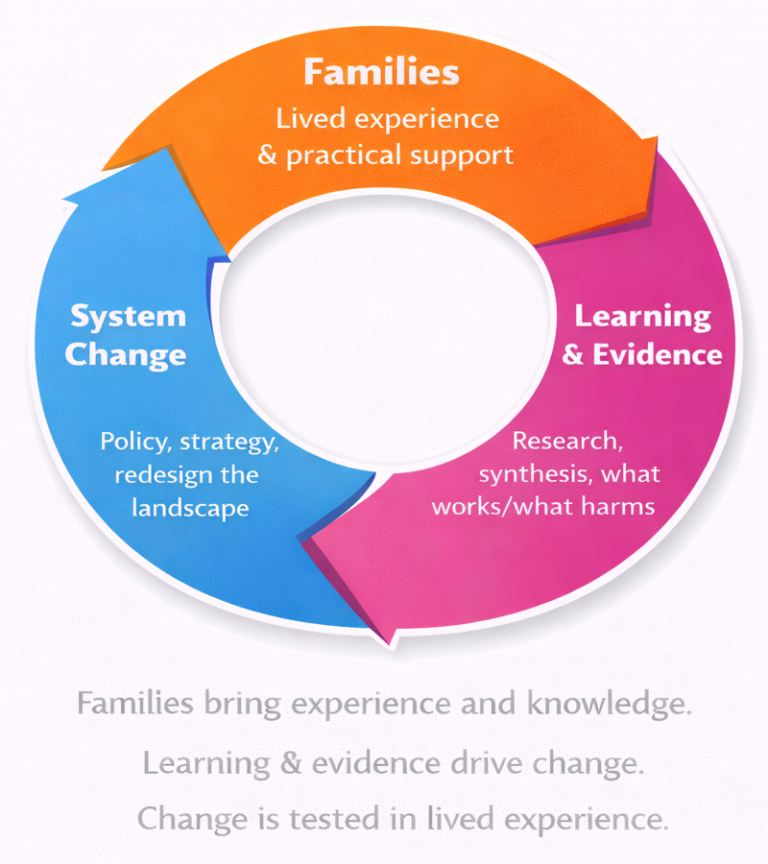
At IRIS, our unique three-strand model integrates Families, Learning & Evidence, and System Change to create meaningful, sustainable impact. By connecting these strands, we empower families, drive evidence-based learning, and advocate for systemic improvements.
Our mission is to redesign how support systems work—not by adding more services, but by listening to the voices of those who know the system best: families themselves. We exist to bridge the gap between lived experience and systemic change, ensuring no family is left to face their challenges alone.
The IRIS Model
Our approach is built on three interconnected strands:
1. Families
We place families at the heart of everything we do. By understanding their needs, challenges, and aspirations, we create tailored solutions that foster resilience, well-being, and growth.
2. Learning & Evidence
We believe in the power of knowledge. Through research, training, and evidence-based practices, we continuously refine our methods to ensure they are effective, inclusive, and impactful.
3. System Change
True progress requires systemic transformation. We collaborate with policymakers, organisations, and communities to advocate for changes that create lasting, positive outcomes for families and society.
How the Strands Interconnect
Our three-strand model is designed to create a holistic, cyclical process:
Families provide real-world insights that shape our Learning & Evidence.
Learning & Evidence informs our advocacy for System Change.
System Change creates an environment where Families can thrive.
By connecting these strands, we ensure that every action we take is informed, intentional, and impactful.
Why This Model Works
Holistic Approach: Addresses the needs of families while driving broader systemic improvements.
Evidence-Based: Ensures our methods are grounded in research and real-world outcomes.
Sustainable Impact: Creates lasting change by influencing policies and practices at every level.